
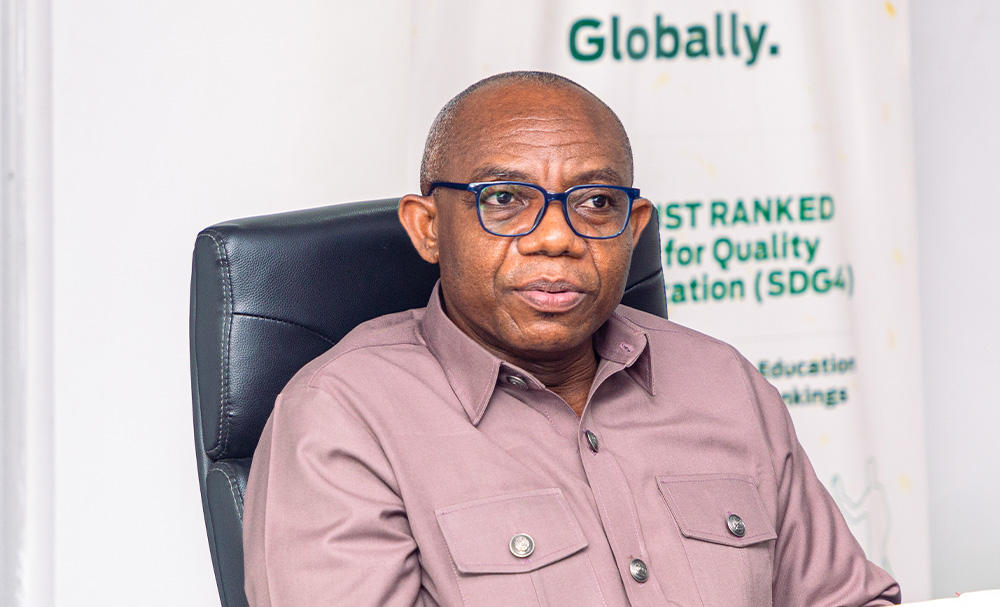
The Vice-Chancellor of the Kwame Nkrumah University of Science and Technology, Kumasi (KNUST) Professor Christian Agyare, has called for greater domestic investment in research and workforce development as external financial support to countries in the Global South declines.
He said countries that have traditionally depended on external research funding must become more intentional about developing domestic financing mechanisms to sustain research, training and capacity development.
Professor Agyare made the call at the third German Academic Exchange Service (DAAD) Global Health Symposium in Berlin, Germany, during a workshop on “Training for Impact: Aligning Global Health Centres’ Capacity Strengthening with Workforce Needs.”
He cited the KNUST Research Fund as an example of an institutional mechanism established to strengthen the research capacity of faculty and postgraduate students while complementing external research funding.
The symposium, being held from September 29 to October 3, 2026, is under the theme, “Five Years of Impact, Five Years of Vision: Transforming Knowledge into Practice.”
It brings together representatives of eight DAAD-supported Global Centres, including the German-West African Centre for Global Health and Pandemic Prevention (G-WAC), hosted by KNUST.
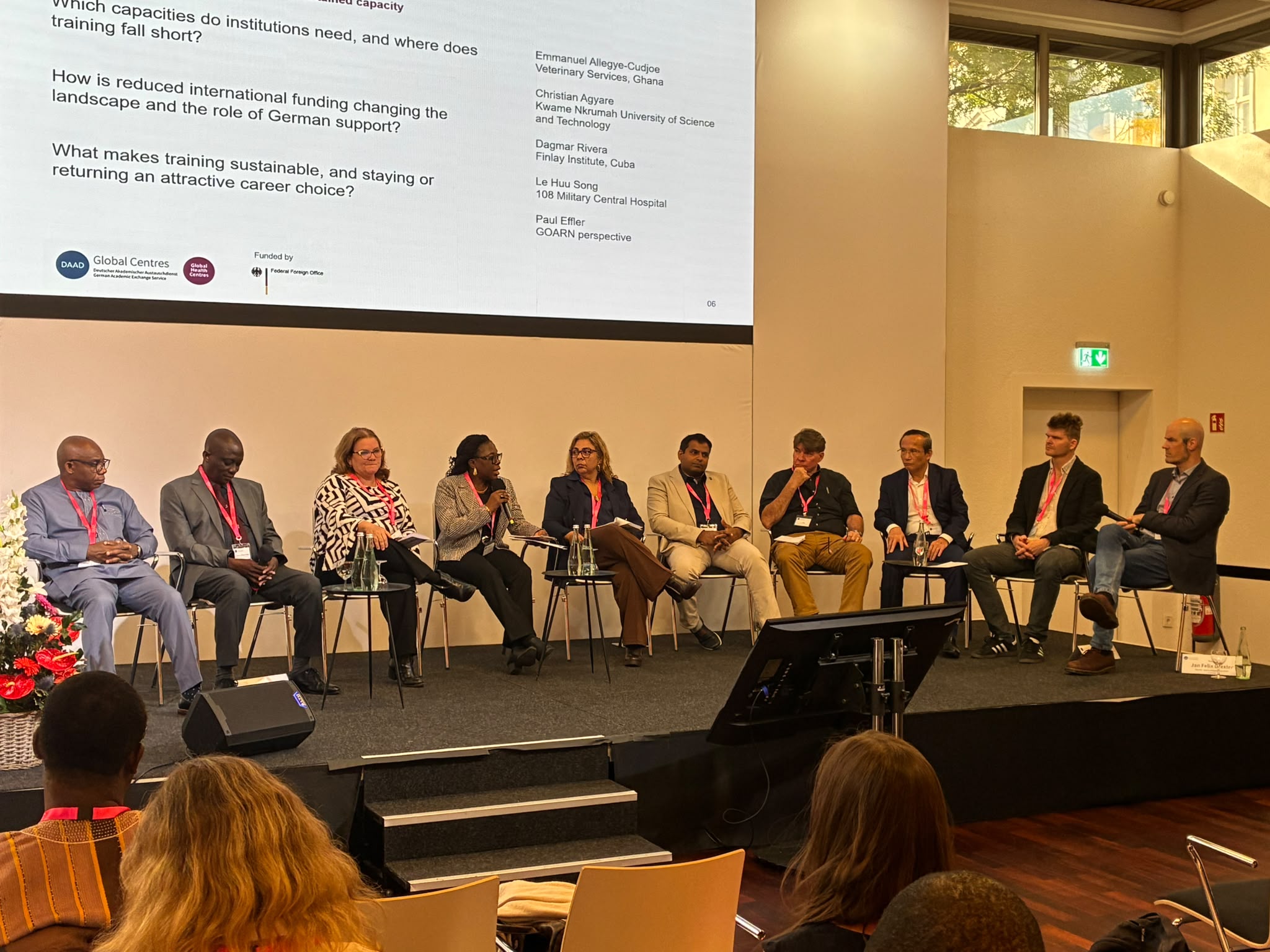
The symposium is examining five years of research, training and capacity strengthening by the centres and exploring how research knowledge and innovation can be translated into sustainable health practice.
Prof. Linda Debrah, Director of G-WAC, said the Centre has adopted a strategic approach to developing professionals capable of translating research into policy and practice.
She explained that G-WAC deliberately selects PhD scholars from diverse professional backgrounds, including people already working in the Ministry of Health, academia and veterinary services.
According to Professor Debrah, training professionals who are already embedded in key sectors helps strengthen the connection between research, policy and practice while enabling capacity-development programmes to respond to actual workforce and health-system needs.
Discussions at the symposium have emphasised the need to move beyond conventional training models towards approaches that deliberately align research training with institutional priorities and workforce requirements.
KNUST and G-WAC's participation also provides an opportunity to share Ghana's experience, strengthen international partnerships and contribute to global discussions on sustainable research capacity and pandemic preparedness.


